
Guide: Use Awareness in a fresh everyday situation
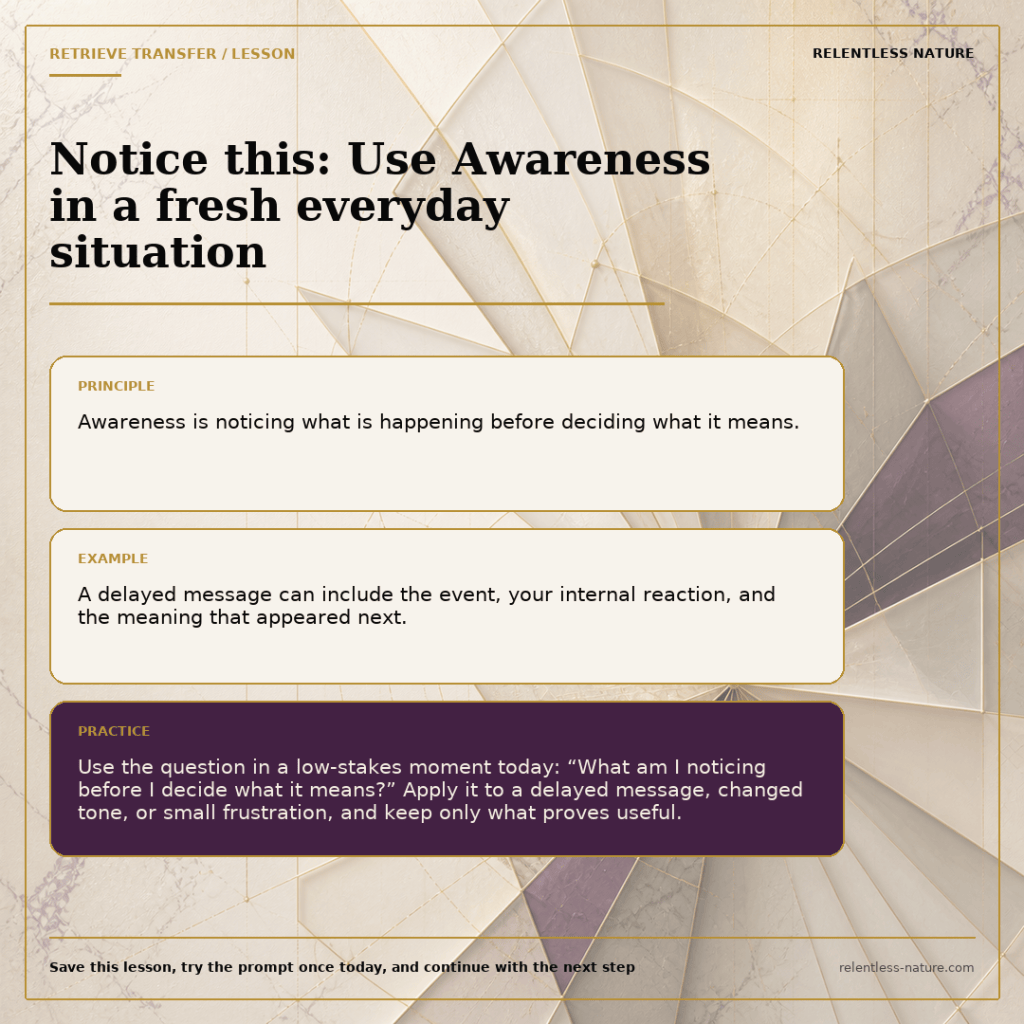
Practice everyday awareness with a small decision: notice someone’s behavior, consider other explanations, and choose a response that fits your purpose.
Guide: The Awareness Check: pause before assigning meaning
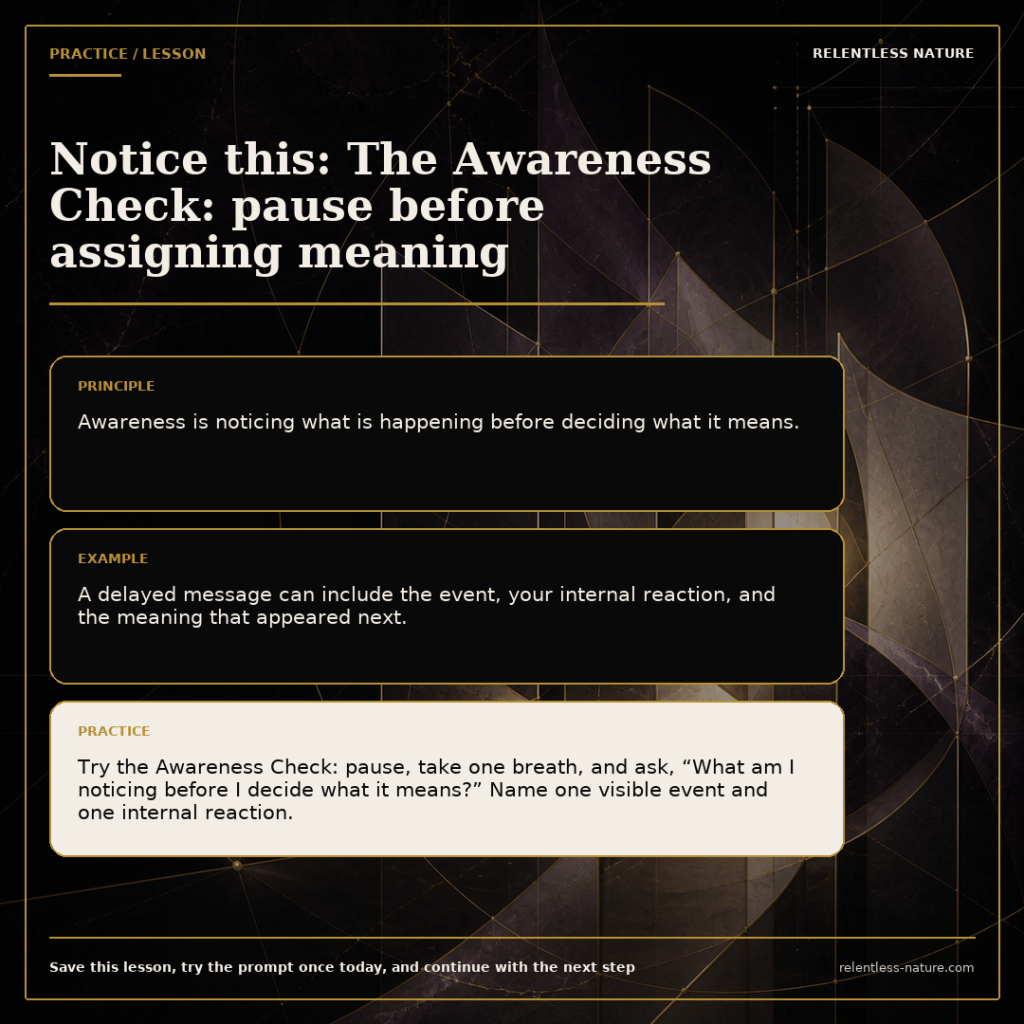
A 30-second check to pause, describe the facts, identify assumptions, and choose a useful response when a message creates uncertainty.
Guide: Noticing and deciding meaning are different jobs
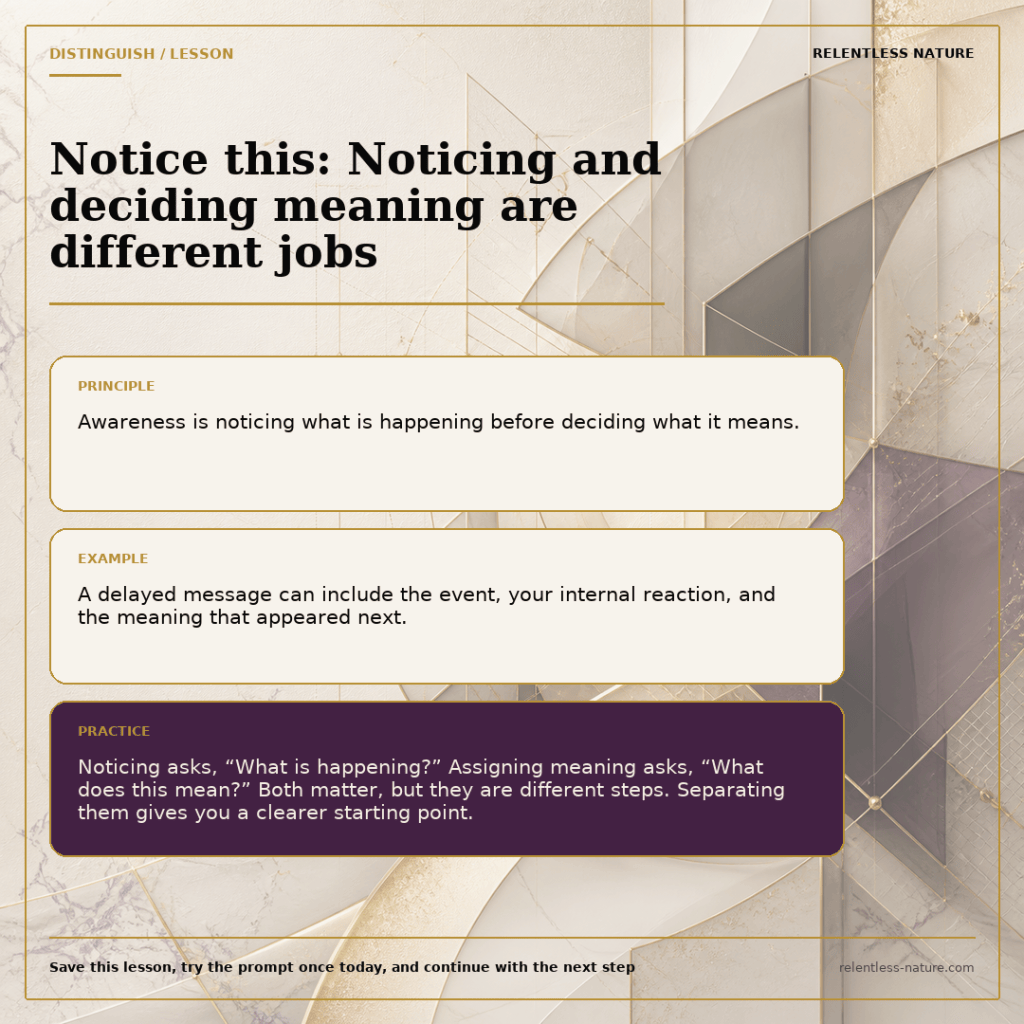
Noticing what happened and deciding what it means are separate tasks. Try a two-column exercise before replying or setting a boundary.
Guide: Awareness means noticing before deciding what it means
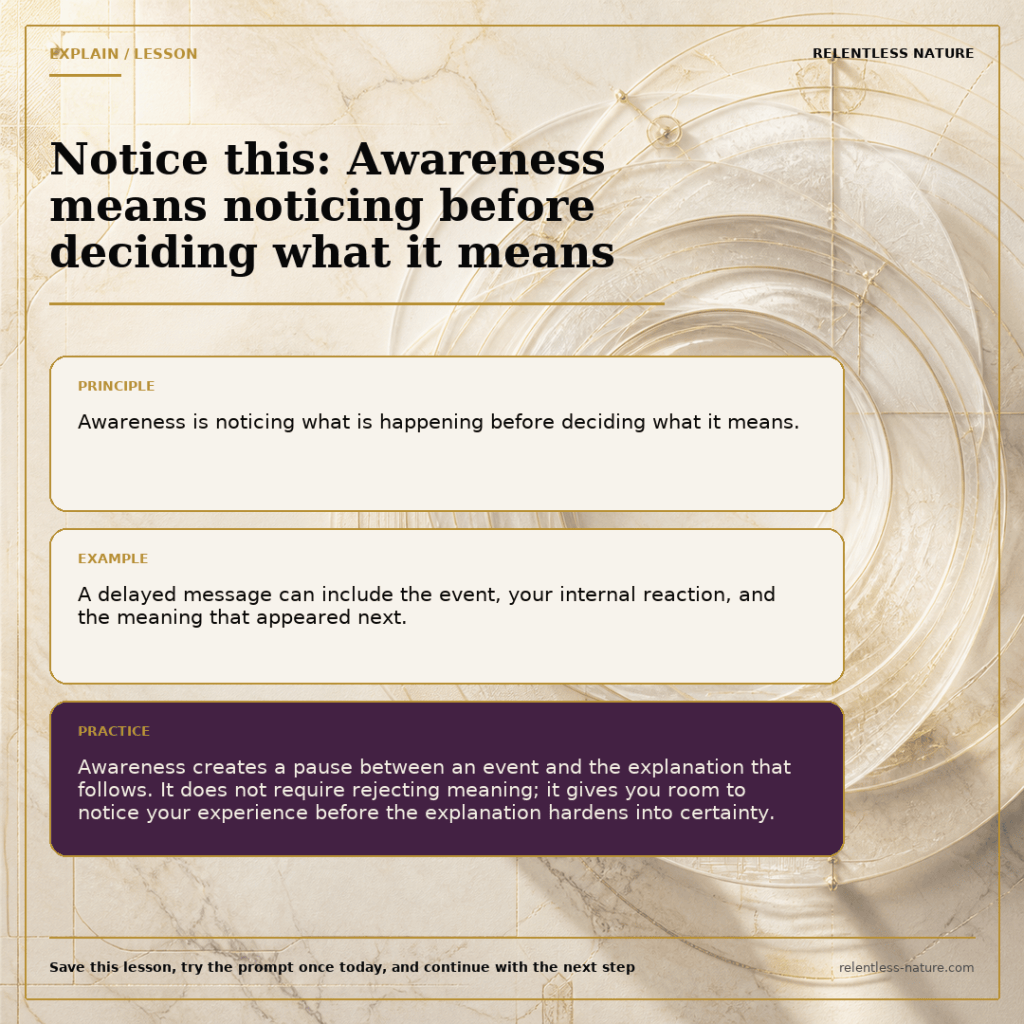
Use a three-part awareness note to distinguish observable details, your own reaction, and the story forming around someone’s behavior.
Guide: The moment before meaning: what are you noticing?
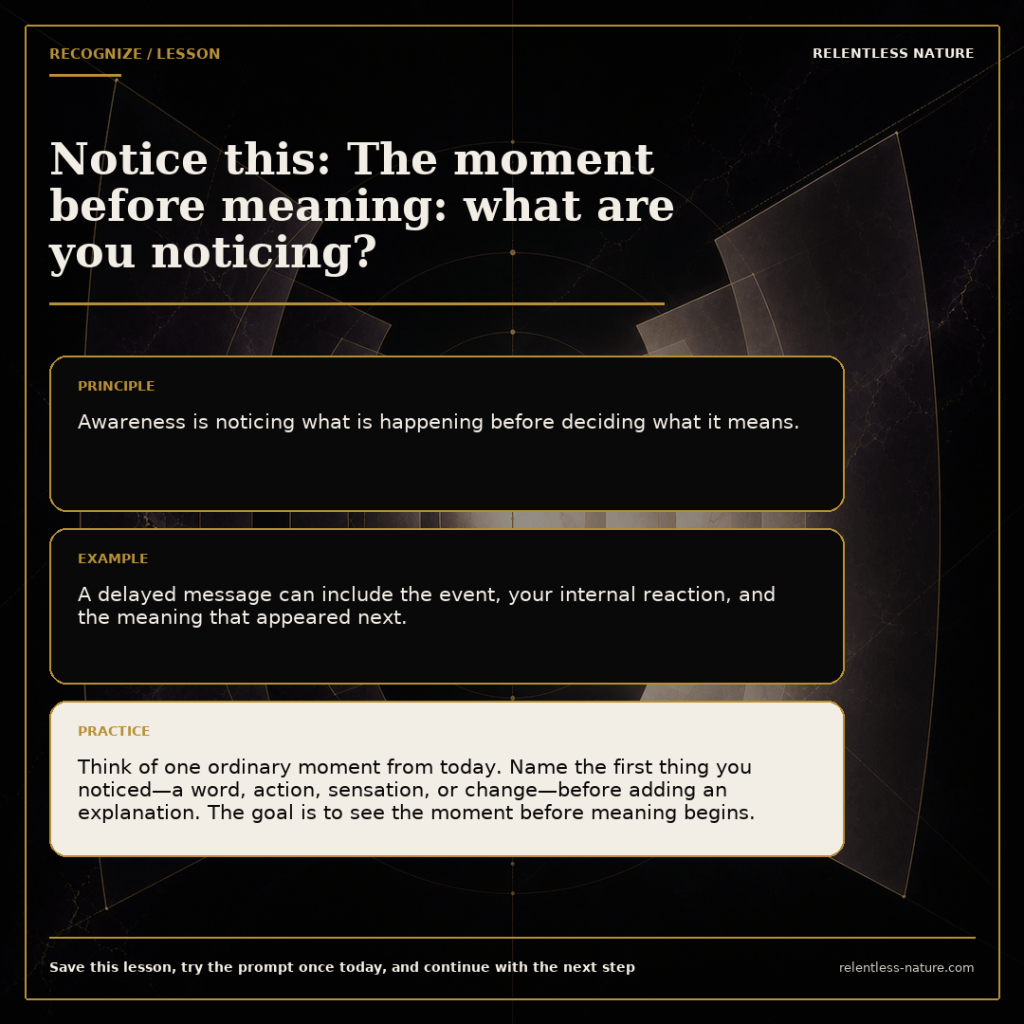
Before a delayed reply becomes a judgment, separate what you observed from the meaning you added. A short exercise for catching that moment.
Using Perspective Taking to Enhance Customer Experience

Customer complaints often reflect concerns about trust and feeling understood. Explore a practical perspective-taking approach for service teams.
Why Perspective Taking Is Essential for Empathy and Emotional Intelligence
Perspective taking is not agreement. Learn to question assumptions and consider another person’s context before deciding how to communicate.
The Hidden Cost of Unempathetic Cultures

Workplace disengagement often develops through small missed signals. Explore how leadership, empathy, and feedback can shape trust and retention.
The ROI of Emotional Intelligence Training
Examine the costs of unresolved conflict, turnover, and communication friction, and explore how to evaluate emotional-intelligence training.
Empathy Burn Out
Empathy can become draining when listening turns into over-responsibility. Learn to balance compassion with capacity, clear requests, and boundaries.